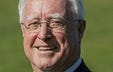

Peter Bentley deserves to be remembered for the principles he defended and the price he paid for defending them.
Former mayor Steve Chadwick’s tribute acknowledges his hard work, practical abilities and commitment to geothermal heating. Those acknowledgements are welcome. But describing their political differences as a useful balance around the council table leaves the central disagreement unexplained. Peter challenged how power was exercised, whose interests received priority, and whether citizens could hold their representatives accountable.
His moral authority came from an independent conscience, practical experience and a profound sense of justice. Having served alongside him, I remember a man gentle in his dealings with others yet firmly determined to do what he considered right. His independence could be inconvenient to those directing council business. That was part of its public value.
The defining event was his resignation on 28 April 2022. Chadwick sought confidential consideration of the controversial Rotorua District Council (Representation Arrangements) Bill. Peter refused to accept secrecy over an issue fundamental to the political rights of Rotorua citizens. He resigned, effective immediately, during the public meeting.
He subsequently explained his objection plainly: “the public has a right to know what each councillor thinks.” That principle goes directly to democratic accountability. Citizens must be able to hear competing arguments, identify their representatives’ positions and judge their conduct. Peter regarded the proposed secrecy as an unacceptable exercise of mayoral authority.
Chadwick defended the confidential discussion as an opportunity to provide an update and seek councillors’ guidance, with a public statement afterwards. But a statement issued after a closed discussion cannot provide the same accountability as citizens observing their representatives deliberate. Peter understood the difference between being told an outcome and being able to scrutinise how it was reached.
The substance mattered equally. The bill sought three Māori ward seats, three general ward seats and four seats elected at large. Equal numbers of ward seats for substantially unequal electoral populations raised a serious question about equal voting power. The Attorney-General’s scrutiny identified an inconsistency with the right to freedom from discrimination. Peter’s objection therefore concerned a fundamental democratic safeguard.
In my assessment, his resignation marked the culmination of an increasingly authoritarian administration. The controversy over confidentiality exposed a wider problem: political authority becoming insulated from the citizens whose consent and money sustained it.
The Te Arawa partnership had already given appointed representatives voting rights on the council’s principal policy, finance and monitoring committees. Chadwick celebrated this as partnership. I questioned the privileged institutional access it conferred on selected tribal representatives before proposals reached final council decisions. Such upstream influence helps determine which problems receive attention, how they are framed and which solutions advance. That deserves scrutiny alongside the final vote.
Peter’s independence also had a financial expression. In 2020, the council increased its annual contribution to Crankworx to $250,000 and committed funding through 2027, alongside extending its underwriting arrangements. Peter and I expressly recorded our votes against. The council cited economic benefits and pandemic pressures. We challenged the priority given to continuing public support for the event.
The question remains straightforward: how much should households struggling with essential bills contribute to tourism promotion and commercial events? Claimed economic benefits require evidence, transparent evaluation and comparison with other uses of public money. A successful event does not automatically justify every subsidy requested.
Affordability should have disciplined the administration’s ambitions. Its 2021 long-term-plan deliberations endorsed a 9.2 per cent average rates increase for 2021/22. Annual consumer-price inflation was 4.9 per cent in the September 2021 quarter. Council costs and household inflation differ, but the comparison illustrates the additional pressure placed on residents’ budgets.
Borrowing compounded that concern. The administration’s financial strategy envisaged debt rising beyond $400 million. That was a projected burden, rather than debt already incurred when Peter resigned. Nevertheless, it committed future ratepayers to servicing ambitions decided in the present. Borrowing can fund necessary infrastructure; its scale, priorities and affordability still demand rigorous public challenge.
My autobiography, Still Approaching My Prime, recounts these conflicts in detail. Their common thread was the struggle to keep public power answerable to ordinary citizens.
Peter’s geothermal advocacy deserves recognition. So does his insistence on open government, equal citizenship, prudent spending and respect for residents’ capacity to pay. His resignation gave those commitments practical force.
An adequate political appreciation must explain why he walked away. Peter Bentley reached the point where remaining would compromise his principles. Remembering that decision honours the moral authority he exercised as a citizen.
*Reynold Macpherson is a retired professor, former chief executive and Rotorua Lakes councillor. He writes about ethics, governance, educative leadership and public policy. He can be contacted at reynold@reynoldmacpherson.ac.nz.
Thanks Dianne. The responses from many folk echoes your analysis. Peter was a thoroughly decent fellow with wise judgement, determined resilience and implacable democrat. He set a superb example.